


Restricted Chemical Product
On 10 March 2026 the APVMA released new regulations detailed in Gazette 5.
“The Australian Pesticides and Veterinary Medicines Authority (APVMA) has today certified that it is in the public interest for chemical products containing any second-generation anticoagulant rodenticides (SGARS) to be declared restricted chemical products (RCPs).
Declaring SGARs as RCPs will enable tighter controls on their purchase and use, including restricting access to individuals who meet specific training and licensing requirements.”
A decision to adopt that certification will be considered by the Australian Department of Agriculture, Fisheries and Forestry (DAFF) in consultation with state and territory authorities, including in relation to any training and licensing requirements.
Under Restricted Chemical Product certification, SGAR products would not be available for sale to the public.
Because training and licensing requirements are yet to be decided, it is impossible to know the restrictions that would be placed on Commercial users. However, if pest controllers are permitted to use SGARs in outdoor bait stations there remains a high risk of secondary poisoning of wildlife and pets.
12-month suspension of SGARs
In the meantime, from 24 March 2026, there is a one-year “suspension” meaning no further manufacture or imports; retailers can sell remaining stock of SGARs to the public under restricted conditions (updated instructions for use); pest controllers can use SGARs in outdoor bait stations close to buildings. Once registration is suspended, the product is treated, for practical purposes, as unregistered and it becomes an offence to supply or sell it. BUT
Although SGARs can no longer be manufactured or imported to Australia, existing stocks can still be used during the suspension. If a person is already in possession of a suspended SGAR (i.e. it’s already in the shed), they have the right to possess or use it. If chemical companies and retailers have large stocks in hand they are allowed to run those stocks down.
A retailer such as a hardware store or their supplier can continue to sell SGARs in smaller pack sizes (if required for that product) as long as they hand out new instructions for use that override the label on the product.
Commercial users of SGARs, including pest controllers and farmers, are also subject to updated conditions of use.
To find out what products are involved, see APVMA Gazette 5 p35 Table 8.
Domestic use
Private dwellings
A retailer such as a hardware store or their supplier can continue to sell SGARs in smaller pack sizes (if required for that product) as long as they hand out new instructions for use that override the label on the product. Details can be found in APVMA Gazette 5 10 March 2026.
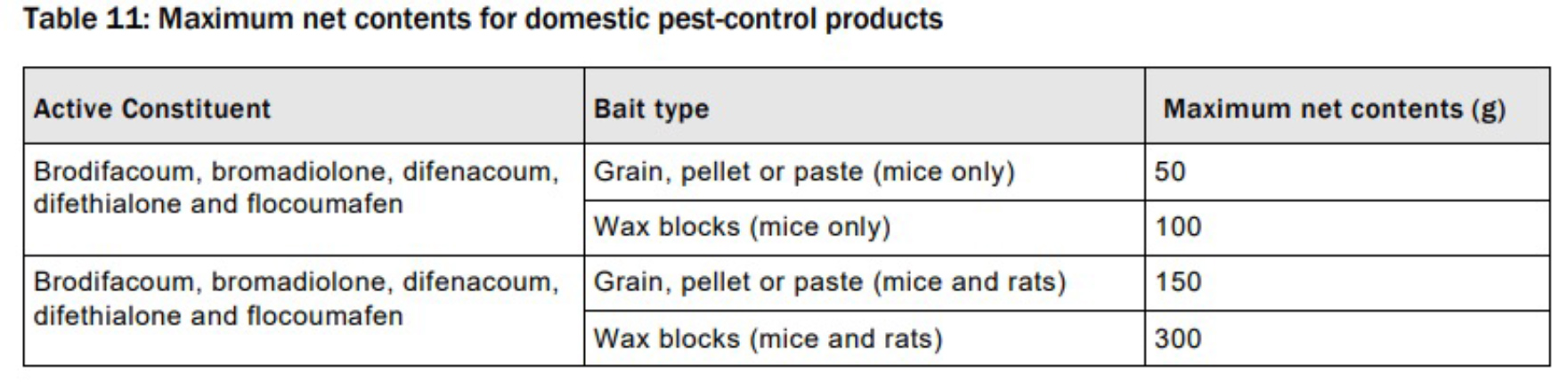
For products listed in Gazette 5 Table 12 which currently have instructions for use in domestic situations:
DO NOT use this product outdoors.
DO NOT use unless secured in a tamper resistant bait station. Where possible, fix tamper-resistant bait stations to the ground or other structures.
DO NOT use the product for longer than 35 days when treating an infestation. If rodent activity is still observed after 35 days, seek advice from the product supplier or call a pest control service. Hazardous to wildlife.
Search for and dispose of dead rodents and slugs/snails in the infested area at each visit to prevent secondary poisoning.
In case slugs/snails are present, move bait station to another location within the rodent infested site, away from slugs/snails. Dispose of slugs/snails, dead rodents and uneaten bait by wrapping in paper, placing in plastic bag and putting in garbage.
When using the product wear disposable gloves. During cleanup and disposal operations of bait and bait stations, wear disposable gloves. Wear disposable gloves when handling rodent carcasses. Wash clothes after performing re-handling activities.
Commercial use
‘In and around domestic homes, industrial and commercial buildings, animal houses, farms, wharves, public service buildings, food factories, hospitals, inside transport vehicles (including ships) and around grain terminals.’
For products listed in Gazette 5 Table 13 which currently have instructions for use in commercial situations:
DO NOT place bait stations outdoors for control of mice.
DO NOT use in areas accessible to non-target animals, pets or children unless secured in a tamper resistant bait station.
DO NOT place bait outdoors unless it is secured in a tamper-resistant and weather-resistant bait station which is secured in place.
DO NOT place bait stations more than 2 meters from buildings.
DO NOT apply this product directly into burrows.
DO NOT use the product continuously for more than 35 days without an evaluation of the state of the infestation and of the efficacy of the treatment.
Hazardous to wildlife. Search for and dispose of dead rodents and slugs/snails in the infested area at each visit to prevent secondary poisoning.
In case slugs/snails are present, move bait station to another location within the rodent infested site, away from slugs/snails.
Dispose of slugs/snails, dead rodents and uneaten bait in compliance with local, state or territory government regulations.
When using the product wear disposable gloves. During cleanup and disposal operations of bait and bait stations, wear disposable gloves. Wear disposable gloves when handling rodent carcasses. Wash clothes after performing re-handling activities.
What does this mean for wildlife?
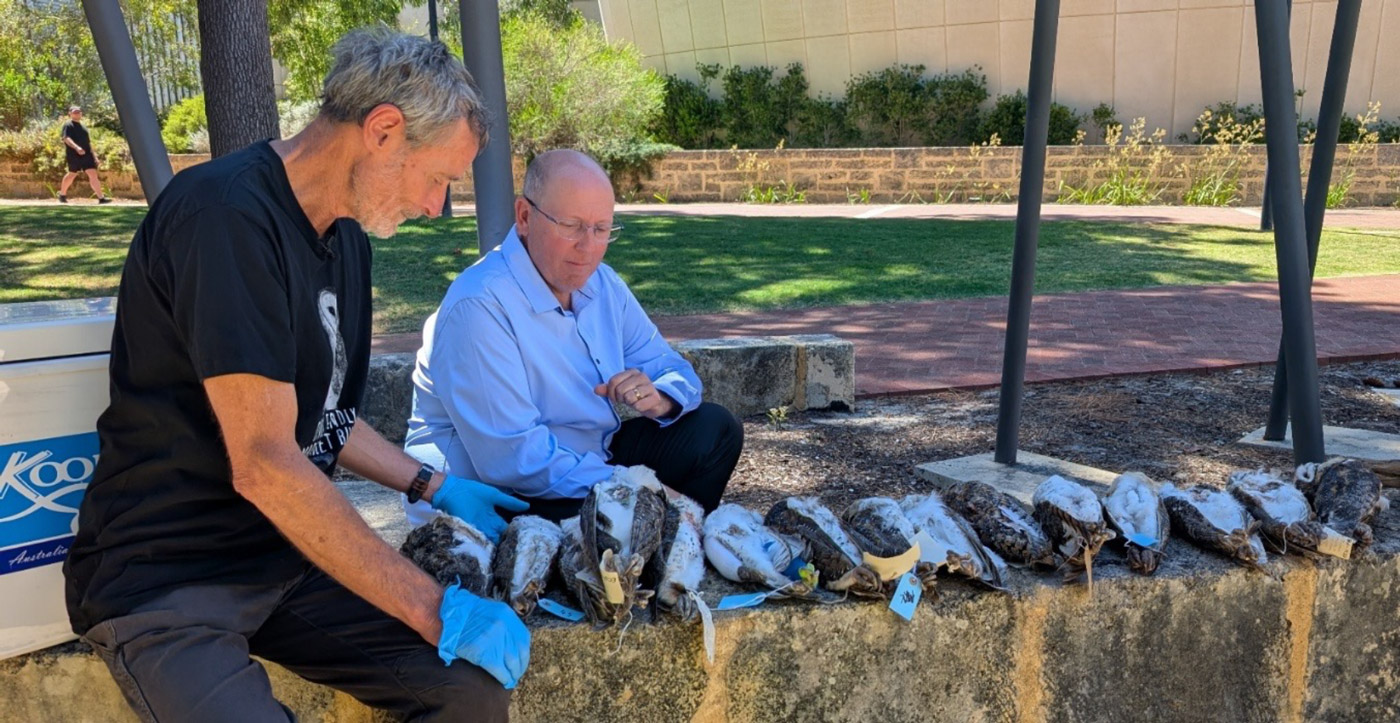
Masked Owls with high or lethal levels of SGARs. Photo Karen Majer
The APVMA recognises the harm to wildlife
The APVMA recognised that the active constituents for SGAR products are toxic for terrestrial vertebrates and cite “harms to a range of animals including but not limited to the following terrestrial vertebrates (the non-target species):
- Birds including owls, kestrels, crows, ravens, raptors, corellas, frogmouths, galahs, gulls, ibis, kookaburra, parrots, songbirds, starlings;
- Mammals including antechinus, bandicoots, quolls, Tasmanian devils, gliders, native rats, possums; and
- Reptiles including lizards, turtles, boas, goannas and snakes.”
EXTRACT FROM APVMA GAZETTE 5:
21. In summary, based on my review and consideration of the information detailed above, I am not satisfied that the use of the SGAR products in Table 8 in accordance with the currently approved instructions is not likely to have an unintended effect that is harmful to non-target species. In short, this is because exposure to these SGARS may have lethal or sub-lethal harmful effects on non-target mammals and birds, and the frequent detections of SGARs in non-target animals in the wider environment demonstrate that the current risk mitigation measures in place are not adequate to prevent exposure of non-target wildlife and the associated unintended harmful effects.
During 12-month Suspension
While the APVMA refers to this as a suspension, there is ample access to SGARs until retail and supplier stocks are cleared.
The new regulations for domestic use mean that SGARs should not be used outdoors and must be secured in a tamper resistant bait station. However people who already possessed SGARs before the announcement do not necessarily know about the newly imposed conditions on use, and there is no way to monitor community adherence to the rules.
Pest control companies and others entitled to Commercial use may use bait stations outdoors close to buildings. This restriction does little to prevent primary and secondary poisoning of wildlife. (See SGARS as Restricted Chemical Products below.)
Owl Friendly Margaret River recommends that householders do not use SGARs and use traps and other methods that are less harmful to wildlife. Instruct your pest control company not to use SGARs.
Once SGARs are Restricted Chemical Products
Declaring SGARs as RCPs will enable tighter controls on their purchase and use, including restricting access to individuals who meet specific training and licensing requirements.
A decision to adopt that certification will be considered by the Australian Department of Agriculture, Fisheries and Forestry (DAFF) in consultation with state and territory authorities, including in relation to any training and licensing requirements.
Under Restricted Chemical Product certification, SGAR products would not be available for sale to the public.
Because training and licensing requirements are yet to be decided, it is impossible to know the restrictions that would be placed on Commercial users. However, if pest controllers are permitted to use SGARs in outdoor bait stations there remains a high risk of secondary poisoning of wildlife and pets.
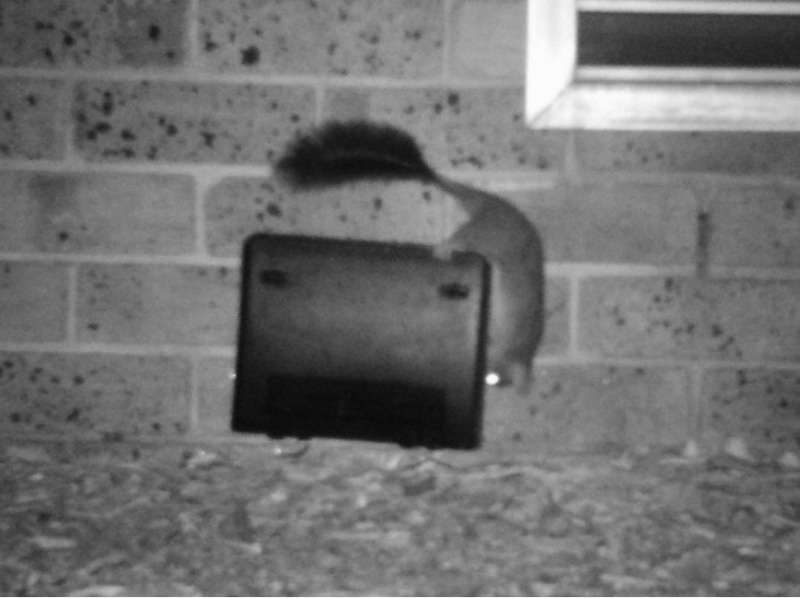
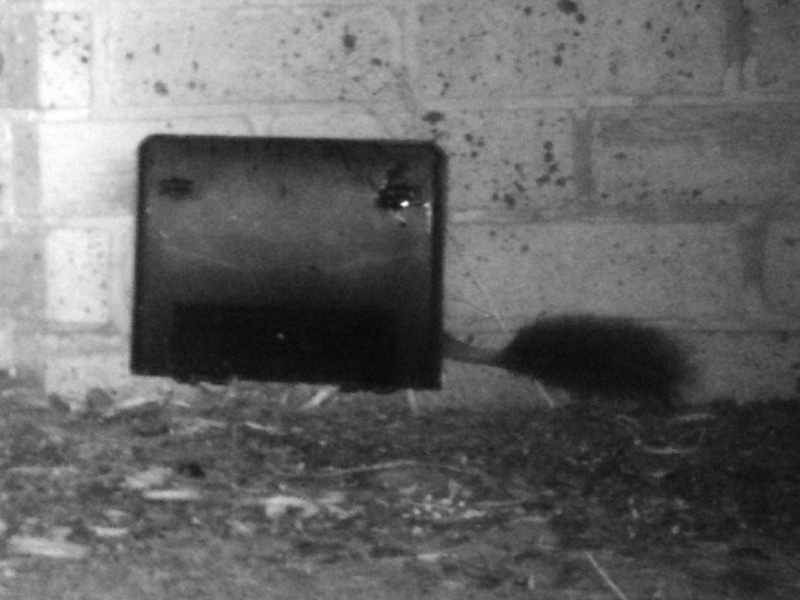
Phascogale entering bait station. Photos courtesy Edith Cowan University.
Bait stations are not the answer
Submissions made to the APVMA during the submission period on the latest review (December 2025-March 2026) clearly showed that bait stations are not the answer to protecting wildlife. Recent research conducted by Edith Cowan University at Bunbury campus highlights that a wide range of wildlife in addition to rodents directly access bait in bait stations (Davis R, Yaschenko N, Wykes B, Molloy S, Estrella S, Lohr M. (2026). High risk of primary exposure to wildlife from tamper-proof rodenticide bait boxes: a case study from south-western Australia. in prep.) As well as risk of primary poisoning of native animals, rodents, marsupials, reptiles and insects that access the bait station disperse and cause secondary poisoning. This is the most likely explanation for why SGAR exposure is being documented in such a wide range of wildlife around Australia.